
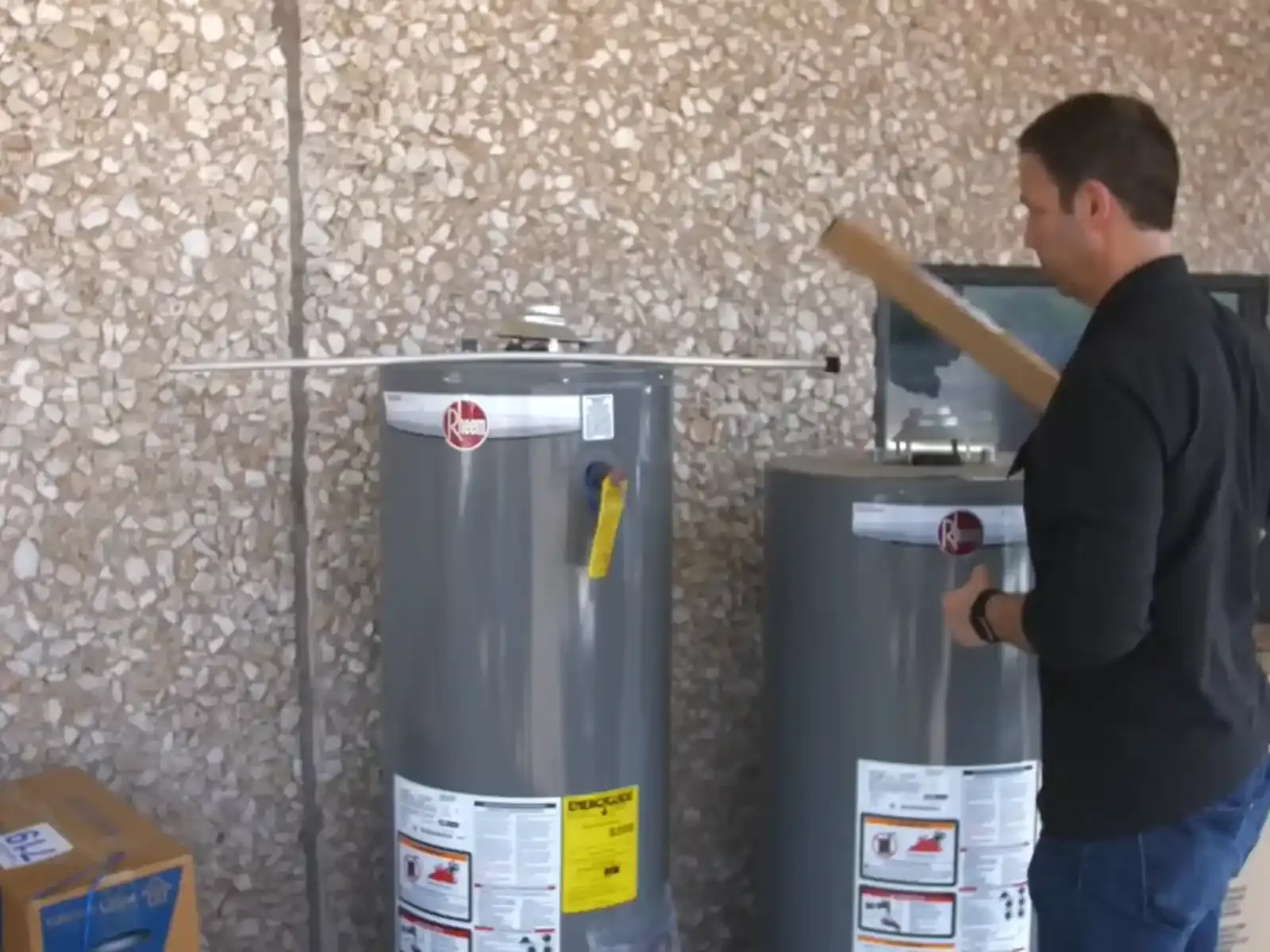
A failed tank cannot be patched
Water heater replacement means removing a worn-out tank and setting a new unit that meets the home's hot water demand. When a tank splits at the seam or the bottom rusts through, patching does not hold. Dispatch answers 24/7, and same-day installs are available when stock and the schedule allow.
Until the crew arrives, close the cold water valve on top of the heater and shut off the gas or the breaker. Slow the damage with towels and a wet vacuum if you have one, and move anything stored near the floor.
Flooded heater: the first ten minutes
- Turn off power at the breaker for an electric unit, or turn a gas unit's control to off.
- Close the cold supply valve above the heater. If it will not budge, shut the home's main.
- Once the cold valve is closed, open a hot tap upstairs so the tank can drain and the leak slows.
- Keep standing water away from outlets and the electrical panel.
- Take photos of the tank, the label and the water damage before you clean up.
If you smell gas while doing this, leave the house first, then call 911 or the gas utility from outside. The water can wait. The gas cannot.
Signs the tank is past saving
Some failures announce themselves, and some look like a minor drip. These are the clues that point to replacement instead of repair.
- Water at the base that comes from the tank body, not a fitting.
- Rust-colored water from hot taps only.
- Heavy rumbling or popping from sediment that has hardened.
- A tank at or past its expected service life that now needs a second repair. The date is on the rating label.
- Corroded fittings and a pan that keeps filling after you stop the supply.
If you are not sure the tank is the problem, our water heater repair page lists the fixable failures. A good diagnosis saves you from buying a tank you do not need.
Water on the floor around the tank?
Close the cold valve, kill the power or gas, then call for a replacement visit.
What a same-day swap looks like
- Shut down and drain
We close the supply, cut power or gas and drain the tank to a floor drain or outside.
- Disconnect and remove
Water lines, gas or electrical connections and the vent come off, and the old tank leaves with us.
- Set and level
The new unit goes on a proper pan or base with a drain line that has somewhere to go.
- Reconnect with new fittings
We use new flex connectors, a new relief valve line and fresh dielectric fittings where metals meet.
- Check the vent or wiring
On gas units we confirm draft and combustion. On electric units we check the circuit and the connections.
- Fill, purge and test
We fill the tank, bleed the air, restore power or gas and confirm hot water at the fixtures.
Thermal expansion, permits and the city's guidance
When cold water heats inside a closed system, it expands and pressure rises. Brigham City publishes its own guidance on thermal expansion in water heating systems. An expansion tank is the usual answer, and if your old heater lacked one, a new heater is the time to add it.
Permit rules vary, so ask the Brigham City building office at (435) 734-6604 before starting. If a permit applies, we explain what an inspection will look at. Skipping that step can complicate a home sale or an insurance claim later.
Tank, tankless or heat pump: the choosing grid
| Option | Strengths | Trade-offs |
|---|---|---|
| Standard tank, same fuel | Quickest swap, familiar parts, no new gas or electrical work | Standby heat loss and a limited hot supply when family use peaks. |
| Tankless | Endless hot water on demand, smaller footprint | Gas line and vent changes are common, and scale control matters. |
| Heat pump hybrid | Uses less electricity than a plain electric tank | Needs air space, a condensate drain and a higher upfront cost. |
| Larger tank | Handles more showers back to back | Needs room and a bigger gas or electric load. |
If you are leaning toward on-demand heat, read about the tankless water heater option first, because it changes the gas, venting and flush plans. If you want a clean-slate setup planned ahead, water heater installation covers sizing and layout in detail.
Hard water and how long the next tank lasts
The city's water page puts local hardness at 17 to 20 grains per gallon. Water that hard leaves mineral layers on the bottom of the tank, and the layers hold heat against the steel and speed up corrosion. That is a common reason a tank dies sooner than its label suggests.
You can protect the next one with a yearly flush and a fresh anode rod check, or take the cause away with a water softener. Ask Brigham City Public Works for the current hardness number before you decide on a softener size.
Swapping a gas heater for a heat pump
Some owners want to retire a gas tank and go electric. It is possible, but it is a bigger project than a like-for-like swap. The gas line has to be capped, the vent addressed, and a heat pump needs a dedicated circuit, open air space and a condensate drain. Plan the project on a scheduled visit, not at 2 a.m. with a flooded floor.
What drives the price of a replacement
Tank size and type
Standard, high-recovery, tankless and heat pump units differ widely in cost.
Fuel and venting changes
New vent, gas line or circuit work adds labor.
Code items
Expansion tank, pan, drain line and relief valve routing.
Access
Attics, tight closets and stairs slow removal.
Timing
Emergency visits can be priced differently from scheduled ones.
Insurance often responds to sudden water damage from a failed tank, but not to the tank itself or to wear, so read your policy. Want your real number? Call (855) 575-2890 and you will get a clear price before work starts.
Perry, Brigham City and beyond
Crews work from 647 S Main St in Brigham City, and Perry plumbing service is about 4 miles south. Tell dispatch your town and whether the heater is in a basement, garage or closet, because stairs and tight spaces change how we plan the carry-out. A power outage, a tripped main breaker or a gas smell is a job for the utility or an electrician first, not a plumber.
Frequently Asked Questions
Yes. Dispatch runs 24/7, and same-day installs are available when stock and the schedule allow. Shut the cold valve and the power or gas while you wait.
Water from the tank body or the bottom seam means the steel has corroded through. Water from a fitting, a relief valve or the drain valve is usually repairable.
Yes. The old tank leaves with the crew, and we leave the area clean.
Often, yes, in a closed system. Brigham City publishes guidance on thermal expansion, and we check your set-up on site.
Permit rules vary, so ask the Brigham City building office at (435) 734-6604 before starting. We can tell you what we will install so you can ask the right question.
Often, yes, when the unit is in stock and the schedule allows. A same-size, same-fuel swap is the fastest.
It can, but it needs a dedicated circuit, space for airflow and a condensate drain, and the gas line has to be capped safely.
Sources and standards
- Plumbing codes in the UPC and IPC families set the rules for fixtures, venting and drains. Ask the Brigham City building office at (435) 734-6604 which edition and permit rules apply to your job.
- The Utah Division of Professional Licensing offers a public Verify a License tool for checking any plumber's license class.
- The Brigham City Water Division explains hardness, pressure testing and water quality on its water page. Call Public Works at (435) 734-6615 with questions.
- Enbridge Gas Utah says to leave the building first if you smell gas, then call 911 or its 24-hour emergency line from outside.
Written by Brigham City Pro Plumbing. Last updated October 29, 2026.