
A plumber's share of keeping a basement dry
Basement waterproofing is the set of steps that keep water out of a below-grade space or carry it away fast once it gets in. Part of that work is plumbing: drains, pumps, discharge lines and finding leaking pipes.
We are plumbers. Cracked foundation walls, failed membranes and excavation around footings belong to foundation and waterproofing contractors, and we will say so plainly instead of selling you something outside our trade.
Groundwater, condensation or a pipe leak?
Wet basements get blamed on the walls, but a surprising number trace back to a pipe. A basement that dampens only after rain or thaw leans toward groundwater. One that stays wet in dry weeks leans toward plumbing.
| What you notice | Likely source | Who handles it |
|---|---|---|
| Damp floor edges after heavy rain or thaw | Groundwater or surface runoff | Drain, pump and grading work. |
| Water appears with no rain at all | Supply or drain leak | Plumber, see leak detection. |
| Wet spot below a bathroom or laundry | Drain or supply line leak | Plumber. |
| Fogged cold pipes, damp air, no puddles | Condensation | Insulation, ventilation or dehumidifier. |
| Horizontal or stair-step wall cracks with water | Foundation movement | Foundation contractor. |
| Water rising at a floor drain | Sewer or ejector problem | Plumber, see drain cleaning. |
A simple home test to separate pipes from groundwater
Turn off every fixture and appliance that uses water. Look at the meter or ask Public Works about a reading. Residents may not open city meters, so call (435) 734-6615 for help, and note that the city offers water pressure testing.
If the dial or leak indicator keeps moving with everything off, water is escaping somewhere. Our leak detection process uses listening gear, pressure checks and moisture readings to find it.
If the meter holds still and the floor only sweats after storms, the water is coming from outside the pipes.
Damp floor with no clear cause?
Tell a dispatcher when and where the water shows up and we will plan the right first visit.
The pit, the pump and the interior drain
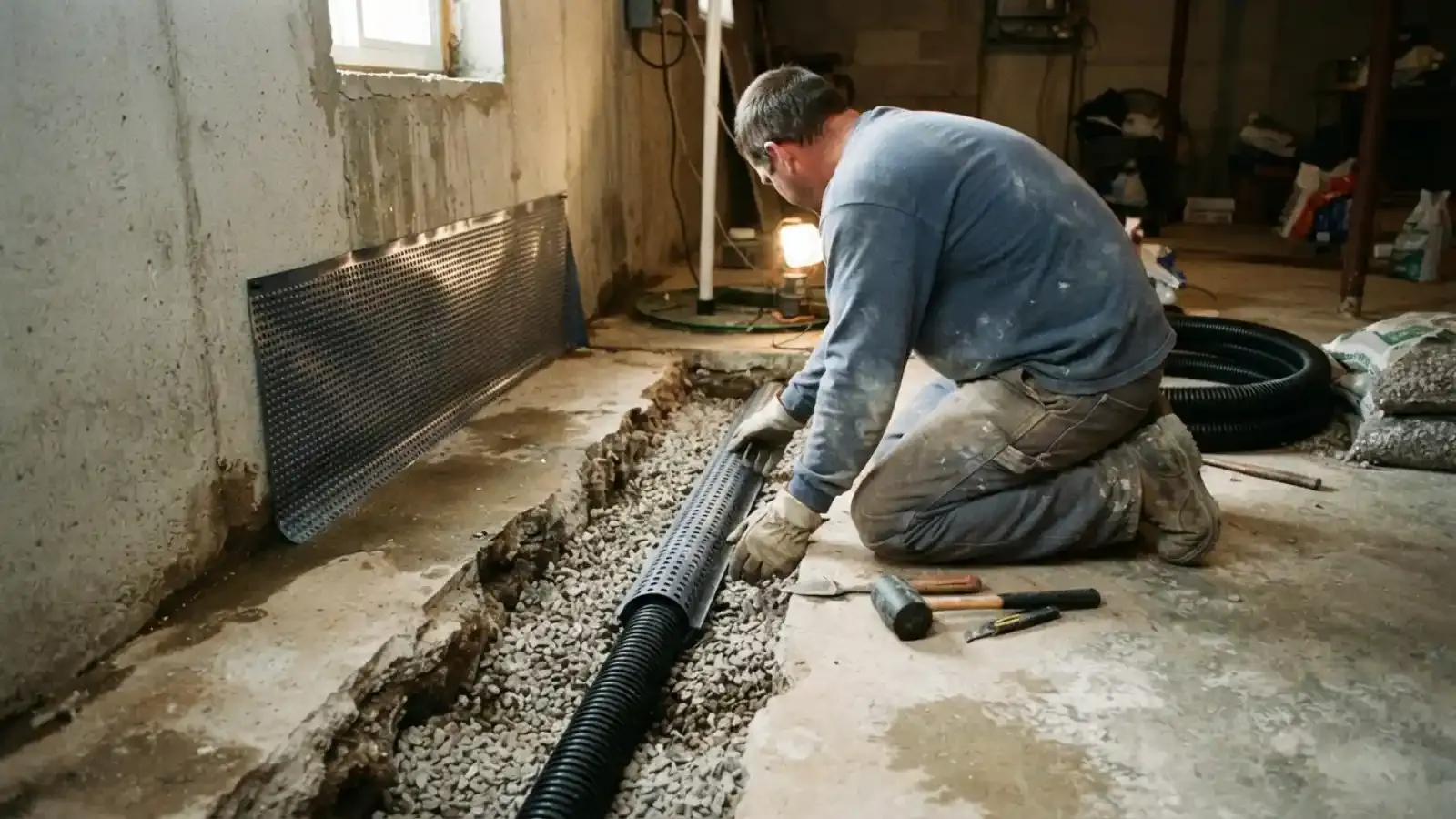
When groundwater gets in, the usual plumbing answer is to give it a channel and a place to go. That means a perimeter drain channel along the inside of the footing, leading to a pit with a pump that sends water outside.
- Pit and pump: sized for the water the basement actually sees, with a check valve and discharge line.
- Floor drains: kept clear so they carry water out, not back up.
- Backup power: a second pump or battery keeps the pit emptying in a storm outage.
- Discharge route: ends well away from the foundation and not in the sewer.
A floor drain that backs up needs drain cleaning before anyone blames the walls. Cutting the slab for an interior channel is heavy work. Ask us whether we handle your layout, and expect an honest answer if a specialist fits better. Repairs to a failing pump are covered on our sump pump repair page.
Window wells, downspouts and the lot outside
A good share of basement water starts outside. Gutters that spill beside the wall, soil that slopes toward the house, and window wells with no drainage all put water against the foundation.
Extending downspouts, clearing window wells and adding a drain at the bottom of a deep well are modest fixes. Regrading a yard is landscaping or excavation work. If a yard dig is planned, call 811 (or 800-662-4111) at least 3 business days ahead and no more than 14 calendar days before you start.
Where plumbing ends and another trade begins
A plumber can move water, find pipe leaks, clear drains and install pumps. A plumber cannot judge whether a wall is structurally sound, repair a cracked footing or apply exterior membranes.
If a wall is bowing, a crack widens, or stair-step cracks run through block, bring in a foundation contractor or structural engineer. Fixing pipes and pumps first often shows which kind of help you actually need.
What the 2018 Box Elder Creek overflow says about runoff
When Box Elder Creek overflowed on March 23, 2018, debris and melting snow pushed water out of the channel, about 10 homes had flooding, including basements, and thousands of sandbags went up. That kind of flood is largely surface water, which plumbing cannot stop.
That matters for planning. A pump handles water that reaches the pit, but it will not hold back a creek. If you live near a drainage path, think about where runoff travels around your lot and ask what a drain and pump can realistically do. Homeowners in Willard, about 7 miles south, can ask the same questions about their own lots.
A sensible order for dealing with a wet basement
- Track when it gets wet
Note whether water follows rain, thaw or nothing at all.
- Rule out pipes
Check the meter with fixtures off and look under bathrooms and laundry.
- Fix the outside basics
Downspouts, window wells and grade come before anything buried.
- Add or repair drainage
Install or service the pit, pump, floor drain and discharge.
- Bring in other trades if needed
Cracks and structural movement need a foundation contractor.
If drain work or new pipe runs are part of the plan, our plumbing installation crews can handle the plumbing portion.
What shapes the price
Source of the water
A pipe leak is a different job from interior drainage.
Slab cutting
Breaking concrete for a channel adds labor and cleanup.
Pump and backup
Size, number of pumps and backup power change cost.
Discharge distance
Longer runs and buried pipe cost more.
Other trades
Foundation or grading work is quoted separately by those contractors.
Homeowners policies often cover sudden accidental water damage, but seepage, groundwater and wear are commonly excluded. Check your policy.
Want your real number? Call (855) 575-2890 for a clear price before work starts.
Frequently Asked Questions
We handle the plumbing side: drains, pits, pumps, discharge lines and finding pipe leaks. Structural foundation repair and exterior membranes are other trades.
Shut off all water use and check whether the meter still moves. Water that appears in dry weather points to a pipe, while water after storms points outside.
It helps once water reaches the pit, but it does not stop water from entering through cracks or runoff. A pit, pump and drain work as a system.
No. That is a structural job for a foundation contractor. We can fix the pipes and drainage around it.
We cannot speak for your policy. Ask your agent how groundwater, surface water and sudden pipe failure are treated.
Permit rules vary, so ask the Brigham City building office at (435) 734-6604 before starting.
Sources and standards
- Plumbing codes in the UPC and IPC families set the rules for fixtures, venting and drains. Ask the Brigham City building office at (435) 734-6604 which edition and permit rules apply to your job.
- The Utah Division of Professional Licensing offers a public Verify a License tool for checking any plumber's license class.
- Blue Stakes of Utah asks you to call 811 at least 3 business days before any digging so buried lines get marked.
Written by Brigham City Pro Plumbing. Last updated October 29, 2026.