
Sewage coming back into the house: do this first
Sewage in a shower, a bathtub or the basement bath means the line out of the house cannot carry the flow. It is urgent, and our licensed plumbers answer 24/7. Stop using water, keep people and pets away from the wet area, and open a window if the smell is strong.
Sewer line repair is the work of fixing or replacing the buried pipe that carries wastewater from your house to the public main or a septic tank. It follows a diagnosis. Cleaning the sewer line clears a stoppage, while repair fixes the pipe that caused it.
- Shut off the washer, dishwasher and every tap.
- Do not flush. Each flush adds to what is coming up.
- Do not use a plunger on the tub or floor drain. It pushes sewage out of the opposite opening.
- Wash hands and keep anything you touched away from food.
How a buried sewer pipe fails
Root intrusion
Fine roots enter at joints and swell until the pipe is partly filled with a mat of fibers.
Cracks and breaks
Soil movement, heavy loads or age can split a pipe along its length or snap it at a joint.
Sags, called bellies
A section settles, holds water and collects solids. Clogs return in the same place.
Offset joints
Two pipe ends shift sideways. Debris catches on the lip.
Collapse
The pipe flattens, and a cable stops at the same spot every time.
Symptoms callers describe before the line gives out
Most homeowners notice slow drains in the lowest fixtures first (a plain drain cleaning visit sometimes fixes that, but not when the cause is the pipe), then a gurgle in a toilet when the washer drains. Other signs include a sewer smell in a bathroom, a P-trap that will not hold water, and damp or unusually green patches over the line in the yard. A pre-purchase surprise is common too: a camera shows a belly or break nobody mentioned.
None of these proves the pipe is broken. A root-choked but intact pipe can be cleaned. That is why we confirm with video before proposing a dig or a liner.
Sewage coming back up?
Stop the water and call. We answer around the clock.
Finding the break before anyone digs
- Cable and test
A cable run shows how far it travels and where it stalls.
- Camera pass
A push camera records the full run. We pause at the damaged spot and note the footage position.
- Locate and mark
A locating receiver above ground picks up the camera head signal, so we can mark the spot and depth on your lawn or driveway.
- Review together
You see the video and decide with full information.
If you only need the diagnosis, our sewer camera inspection page describes that visit on its own.
Repair options and their trade-offs
| Method | Fits | Trade-off |
|---|---|---|
| Spot repair | One short broken section | Needs an excavation at that spot, but limits the dig. |
| Lining the pipe | Long runs of cracked pipe or root-prone joints | Less digging, but it needs a clean pipe and does not fix a bad sag or collapse. |
| Pipe bursting or replacement | Collapsed, offset or badly bellied pipe | The most work, with the longest-lasting result. |
| Lateral replacement to the main | Failed line from house to the public connection | Needs coordination on who owns each segment. |
Honest limits apply. Lining cannot bring back a collapsed pipe, and a spot repair does nothing for the next section if the whole run is old. We give you the options in plain terms, including the one that costs less now and may cost more later.
Dig or no dig
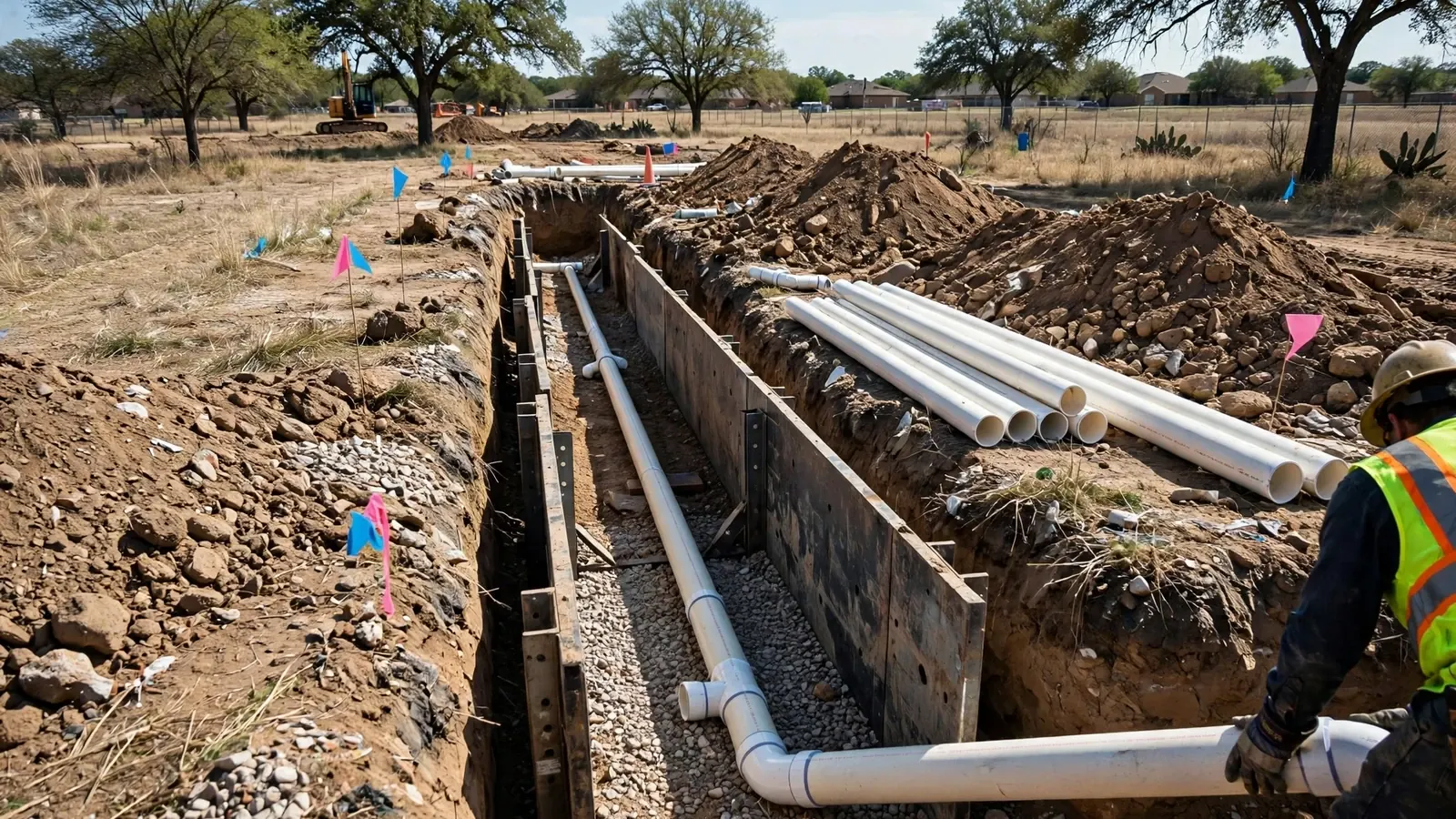
Trenchless methods keep the lawn, the driveway and the landscaping mostly intact. They are not always possible. A deep bellied section, a pipe with a collapse or a tight bend can force an open trench. Lining also depends on a clear path through the pipe, so cleaning, often with hydro jetting, usually comes first.
Replacing the lateral, the pipe between the house and the public connection, is the largest job we describe here. It makes sense when the camera shows damage along most of the run, since patching one spot leaves the weak pipe on both sides.
An open trench is more disruptive but lets us see the bedding, replace pipe on a correct grade and fix the real cause. The camera footage decides, not a sales preference.
Before the first shovel: 811 and who owns what
Blue Stakes of Utah asks you to call 811 before any excavation, at least 3 business days ahead and not more than 14 calendar days. Utility lines marked in the yard keep a repair from striking a gas or power line, so plan the dig date around it.
Ask Brigham City Public Works at (435) 734-6615 which segment belongs to the city and which to you. That decides who pays and who digs. Do not assume.
Septic is a different system
If your property uses a septic tank, a backup may come from the tank, the drain field or the pipe between. We can inspect and repair the plumbing between the house and the tank. Tank pumping is a different specialty, so ask a septic company about it.
What changes the price, and what insurance does
Length and depth
A longer or deeper run takes more labor and equipment.
Method
Spot repair, lining and full replacement sit at different levels of work.
Surface
Lawn, concrete and landscaping change restoration.
Access and cleanouts
A cleanout makes the camera and cable easier to place.
Hour of the call
An emergency visit may differ from a booked appointment. Ask when you call.
Homeowners policies often cover sudden accidental water damage but not wear, neglect or the failed pipe. Check your policy. Want your real number? Call (855) 575-2890 for a clear price before work starts. Same-day appointments are available when the schedule allows, and Perry, about 4 miles south, is on our regular route.
Frequently Asked Questions
Yes. Dispatch runs 24/7. For an active sewage backup we focus first on stopping damage, then diagnose with a camera. Repair planning follows once the line is stable, and the dig waits for the utility locate.
Sometimes. Lining and pipe bursting reduce digging. A collapsed or deeply bellied section may still need a trench. The camera tells us which applies.
Call Brigham City Public Works at (435) 734-6615 and ask who owns which segment. The property line and the connection point matter.
Possibly. A dry trap, a loose toilet seal or a vent issue can cause it too. If the smell comes with gurgling or slow drains, have the line checked.
Order a camera inspection before closing and keep the video. Ask the seller who handled earlier repairs. We make no assumption about the age of a home, because the video shows the actual pipe.
We repair the plumbing between the house and a tank. For tank pumping or drain field problems, ask a septic specialist or your health office.
Sources and standards
- Plumbing codes in the UPC and IPC families set the rules for fixtures, venting and drains. Ask the Brigham City building office at (435) 734-6604 which edition and permit rules apply to your job.
- The Utah Division of Professional Licensing offers a public Verify a License tool for checking any plumber's license class.
- Blue Stakes of Utah asks you to call 811 at least 3 business days before any digging so buried lines get marked.
Written by Brigham City Pro Plumbing. Last updated October 29, 2026.