
Cold showers or a wet floor? Do this before we arrive
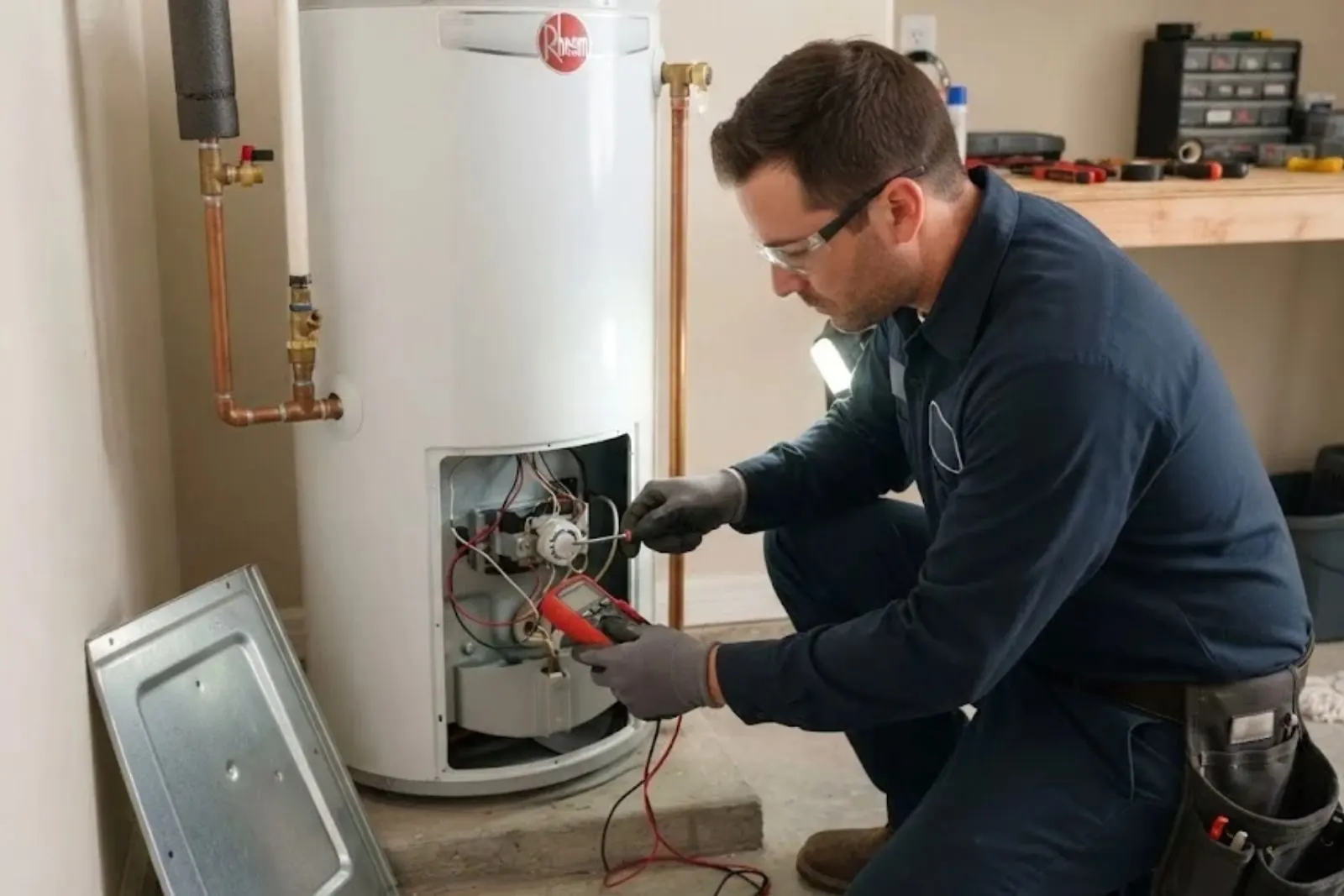
Water heater repair means diagnosing why a tank or its controls have stopped making hot water, then fixing the failed part if the tank is still sound. Dispatch is open 24/7, and same-day visits are available when the schedule allows. While you wait, shut the cold supply valve above the heater, cut the breaker or turn the gas control to pilot or off, and put a bucket under any drip.
Do not drain a hot tank by hand until it has cooled, because the water can scald. Take a photo of the data label on the side of the tank. Model, size and fuel type let the technician plan parts before the truck leaves.
Water pooling around the heater: leak or condensation?
A heater leak is the call we hear most at odd hours: a pan filling, a damp garage floor, a stain on the ceiling below the closet. The first job is to learn where the water actually comes from, because the answer decides everything else.
- Drips at the top: usually an inlet or outlet fitting, a nipple or a dielectric union. These are fixable.
- Water from the temperature and pressure relief valve: often a pressure or thermal expansion problem, or a valve that has worn out.
- Water at the drain valve near the bottom: a loose or damaged valve, which is a modest repair.
- Water seeping from the tank body or the bottom seam: the tank has rusted through. No patch lasts, so the honest answer is replacement.
Light moisture on a cold tank in summer can also be condensation, not a leak. Wipe it dry and look again in an hour. If the tank is the source, our water heater replacement crew can usually set a new one the same day when parts and schedule allow.
No hot water at all: the urgent checklist
Nobody can shower, and the dishwasher is running cold. A heater that has stopped heating is almost always one of a short list of failures, and a technician can narrow it down in minutes. Some of the checks are safe for you to try first, and some are not.
| What you see | Gas unit, likely cause | Electric unit, likely cause |
|---|---|---|
| Nothing heats | Pilot out, thermocouple worn, or the gas control failed | Tripped breaker, a dead upper element or a failed thermostat. |
| Water warm but not hot | Dirty burner, weak flame or a clogged flue | Lower element burned out or thermostat set too low. |
| Hot water runs out fast | Sediment filling the tank bottom | One element dead, so half the tank stays cold. |
| Rumbling or popping | Scale and sediment baking on the tank floor | Scale crusting on the elements. |
| Reset button keeps tripping | Not applicable to most gas units | Shorted element or wiring fault, which needs an electrician's eye. |
If you own an electric unit, check the breaker first. If the breaker is fine and the unit will not heat, stop there. Opening the access panel exposes live wiring.
Tank dripping or the water running cold?
Shut the cold valve, kill the power or gas, and call for a diagnosis.
Gas heaters and the smell of gas
A gas water heater has a burner, a flue and a gas control, and each can fail without a leak. A rotten-egg smell is different. If you smell gas, leave the house first. Once you are safely away, call 911 or the gas utility's 24-hour emergency line, 1-800-767-1689. Do not use a light switch, a phone inside the house or a lighter.
- A yellow, lazy flame or soot around the draft hood means incomplete combustion and needs a service call.
- Water dripping into the burner chamber can put the pilot out again and again.
- A pilot that lights but will not stay lit usually points to a worn thermocouple.
- Sooty stains, a hot flue pipe at the wall or any dizziness means leave and call for help.
What 17 to 20 grains of hardness does inside a tank
Brigham City's own water page lists hardness at 17 to 20 grains per gallon, which counts as very hard on the USGS scale. In a heater, that mineral load bakes into a crust on gas tank floors and on electric elements. A crust acts like a blanket, so burners run longer, elements burn out sooner and the tank rumbles when the water boils underneath.
Flushing the tank once a year clears loose sediment and extends the life of the parts we repair. A water softener slows the build-up for good, and ask Public Works for the current hardness figure before you size one. If you are thinking about changing the whole setup, tankless water heater options need scale control even more.
Parts we repair, and parts that tell us to stop
Heating elements and thermostats
Common electric failures. They are inexpensive to swap compared with a new tank, if the tank is healthy.
Thermocouple, pilot assembly, gas control
The usual gas culprits. A new gas control is not worth buying for a tank that is also leaking.
Anode rod
The sacrificial rod that protects the tank wall. Replacing a spent one can add years, but only if the tank is not already corroded.
Relief valve and fittings
Cheap parts that cause messy leaks. We replace them and check the expansion setup that made the valve open.
Drain valve and flush
A seized valve is swapped and the tank is flushed to move out the sediment.
There is a point where repair stops making sense. A heater with a rusted tank, a failed repair this year or a recurring leak is a replacement candidate. We tell you which side of that line your unit is on before we start.
Heat pump and hybrid units
Hybrid and heat pump water heaters add a compressor and a fan on top of a normal electric tank. They still use elements as backup, so a cold shower does not always mean the heat pump has failed. Condensate drain clogs, blocked air filters and tripped breakers are common reasons for errors, and we check those first. Compressor repair is a specialist item, and we will say so if that is what the unit needs.
What shapes the price of a repair call
Fuel and unit type
Gas, electric and heat pump units use different parts.
Parts availability
A common thermostat is on the truck more often than a discontinued gas control.
Tank age and condition
A sound tank justifies a repair, and a corroded one does not.
Access
A heater in a tight closet or an attic takes longer to service.
After-hours dispatch
Night and weekend calls are priced differently from scheduled ones.
Homeowners policies often cover sudden, accidental water damage but not wear, neglect or the failed part itself, so keep photos and check your policy. Want your real number? Call (855) 575-2890. You get a clear price before work starts.
When it is not a plumbing job
- A gas smell is a utility and 911 matter first, as covered above.
- A breaker that trips again as soon as you reset it points to wiring, so call an electrician.
- No water at any tap, hot or cold, may be a city supply problem. Brigham City's after-hours water line is (435) 723-6868.
- Flood damage to drywall, carpet and insulation needs a drying contractor after the leak is stopped.
- A leaking tank that has been repaired twice is cheaper to replace than to keep chasing.
Hot water on the road to Tremonton and back
Heaters in homes across Brigham City tend to fail on the coldest mornings, when the incoming water is at its coldest and the unit works hardest. Our reach extends to the north end of the county, and Tremonton service is about 20 miles from the shop. Give dispatch the town and the unit's fuel type when you call, so the right parts ride along.
If you suspect the leak is not only at the heater, a leak detection visit can check the supply lines around it before the repair is closed up.
Frequently Asked Questions
Yes. Dispatch is 24/7, and same-day service is available when the schedule allows. Shut the cold valve above the heater and turn off the power or gas control while you wait.
If the water comes from the drain valve, yes, that is a small repair. If it seeps from the tank body or the lower seam, the tank has failed and replacement is the sensible route.
On a gas unit, the pilot, thermocouple or gas control is the usual cause. On an electric unit, it is a tripped breaker, a failed element or a bad thermostat. A technician can tell which in a short visit.
It is a good habit, because the city lists very hard water at 17 to 20 grains per gallon and minerals settle in the tank. A flush moves loose sediment out, but it will not clear baked-on scale.
Neither is better. Gas units have more moving parts to check, electric units have simple elements and thermostats. The tank's age matters more than the fuel.
We handle the plumbing and electrical connections, filter and condensate issues, and the backup elements. Sealed compressor systems may need a specialist.
Leave the house first. Then call 911 or the gas utility from a safe distance. Do not light anything, flip switches or try to repair it yourself.
Sources and standards
- Plumbing codes in the UPC and IPC families set the rules for fixtures, venting and drains. Ask the Brigham City building office at (435) 734-6604 which edition and permit rules apply to your job.
- The Utah Division of Professional Licensing offers a public Verify a License tool for checking any plumber's license class.
- The Brigham City Water Division explains hardness, pressure testing and water quality on its water page. Call Public Works at (435) 734-6615 with questions.
- Enbridge Gas Utah says to leave the building first if you smell gas, then call 911 or its 24-hour emergency line from outside.
Written by Brigham City Pro Plumbing. Last updated October 29, 2026.