
Start with the source, not the sealant
Paint-on sealers and patch kits tempt people because they are fast. They also fail often, since they treat a symptom. If water is entering because of a leaking pipe, no wall coating will stop it. If it is entering because soil outside is saturated, a pipe repair will not help either.
A plumber can handle the plumbing side: leaking supply or drain lines, sump pumps, interior drains that tie to a pump, and drainage from downspouts and window wells. Cracks in the foundation wall, settlement, and exterior excavation belong to a foundation or waterproofing contractor.
The framework below helps you tell which one you have.
A decision framework: where is the water coming from?
| What you notice | Likely source | Who fixes it |
|---|---|---|
| Water appears after rain or snowmelt, not on dry days | Groundwater or surface runoff | Waterproofing contractor, with a plumber for the pump and discharge. |
| Wet spot is on a wall or floor near a pipe, and shows up on dry days too | Pipe leak | Plumber, starting with leak detection. |
| Water bubbles up at the floor drain or a low fixture | Sewer or drain backup | Plumber, and Public Works if the city line is involved. |
| Water on the floor under a window | Window well that cannot drain | Plumber for drainage, carpenter for the window. |
| A horizontal crack with seepage | Structural movement | Foundation contractor or engineer. |
| Meter keeps moving with everything off | Hidden leak | Plumber with leak detection gear. |
Wet basement, cause unknown?
Start with the meter test, then call for leak detection if it moves.
Quick checks you can do in an afternoon
- Read the meter
Turn off every water use, then watch the meter dial for a few minutes. Movement points to a leak, not groundwater.
- Tape a dry-test square
Stick a square of plastic sheet to the wet wall with tape on all edges. Moisture under the plastic means water through the wall. Moisture on top means indoor humidity.
- Walk the outside
Check that downspouts discharge well away from the house and the ground slopes away from the wall.
- Look at the window wells
Remove debris and check for standing water. A well that holds water sends it straight to the glass and frame.
- Check the sump if you have one
Pour in a bucket of water. The pump should start and empty the pit before you leave.
What a plumber can do for a wet basement
- Find and repair a leaking line using listening gear and pressure checks.
- Install or replace a sump pump and discharge line, with a check valve.
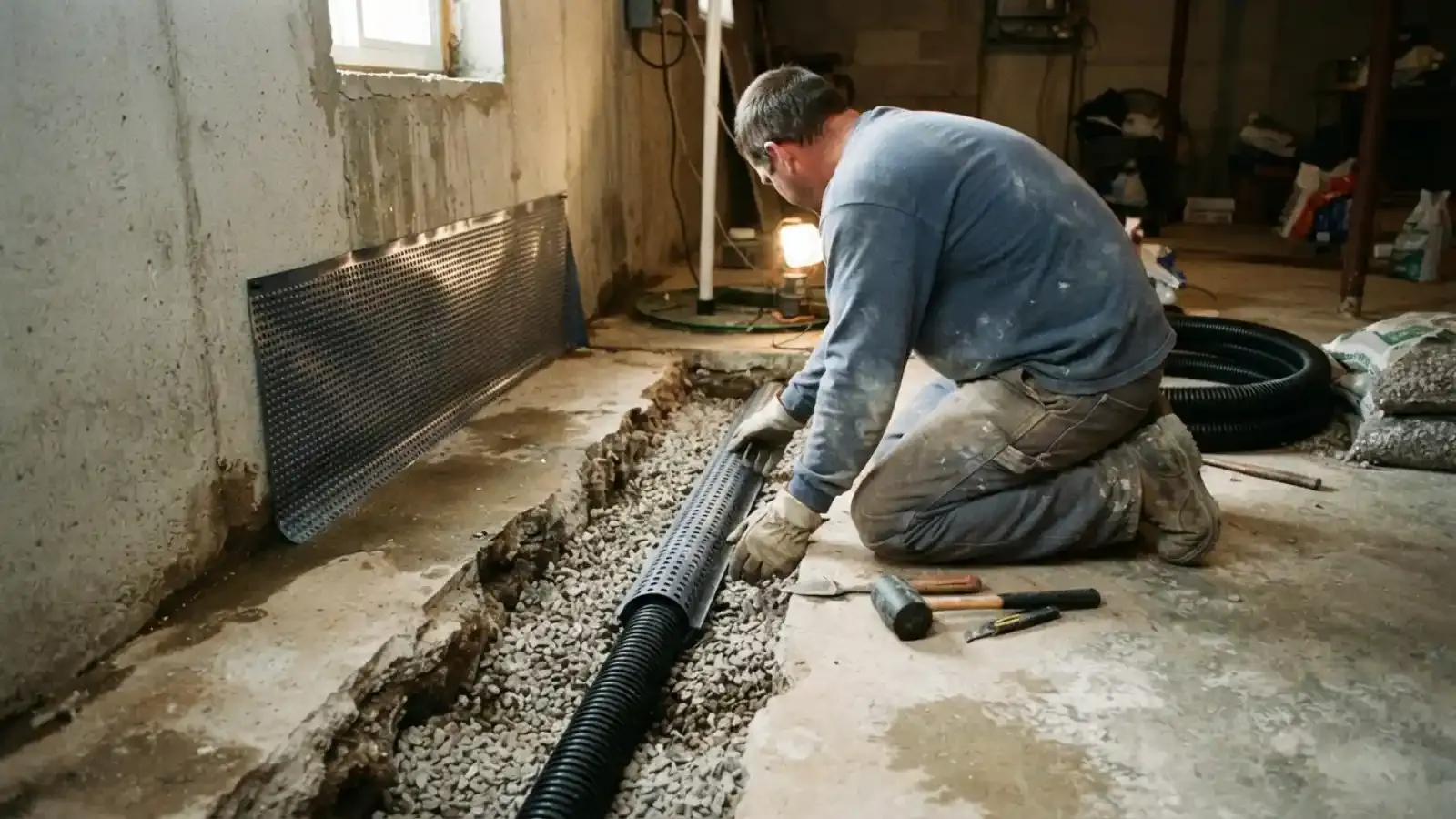
- Tie an interior perimeter drain into a pit where the design calls for it.
- Clear or reroute downspout and window well drains.
- Check the sewer line when the water is wastewater, not groundwater.
If the cause turns out to be a pipe, leak detection should pinpoint it before anyone opens a wall. If groundwater is the issue, the plumbing side often centers on a pump and a clear exit path for the water.
Where plumbers stop
We are a plumber. Structural cracks, wall repair, exterior waterproofing membranes, and regrading the yard are not plumbing jobs, and a good plumber will say so.
Ask any contractor what they will fix, what they will not, and how they will handle the discharge. A reliable basement waterproofing plan should name every trade involved, so nobody drains water to a place that floods a neighbor.
How interior drains and sump pits fit together
An interior perimeter drain is a channel or pipe under the basement slab along the walls. It collects water that rises at the footing and sends it to a sump pit. From the pit, a pump lifts it out through a discharge line.
Each part has to be right. A drain that lacks a clean path to the pit leaves water behind. A pump that is too small for the inflow runs constantly and fails early. A discharge line that ends near the foundation just recycles the water back to the same wall.
This is also why a sump alone is not a full answer. It manages water after it arrives, while the other trades work on keeping less of it arriving. When both are sized properly, the system is quiet most of the year and busy only in melt or storm season.
Window wells and downspouts: cheap fixes first
- Extend downspouts so they discharge several feet from the wall, not at the corner.
- Keep window wells free of leaves, gravel buildup, and ice.
- Make sure a well has a working drain at the bottom, or add one.
- Fill low spots against the foundation so the ground slopes away.
- Check gutters for overflow lines that mark spill points.
These steps cost little compared with a full waterproofing job, and they often reduce the load on every other system. Do them before you pay for anything bigger.
Why spring is the season to watch
Brigham City averages 38.3 inches of snow a year, with an average January low of 18.1 F. The snow that piles up through winter melts in spring, and that water has to go somewhere.
Walk the yard in late winter. Clear drifts from window wells and keep downspouts open. A frozen discharge pipe can send pump water back into the pit, so check where yours exits when the ground is still hard.
Making a plan and a budget conversation
Get at least two opinions when the source is unclear, and ask each contractor to explain what they saw. The better explanation usually points to the right fix.
Ask for a clear price before work starts and ask what happens if the first fix does not stop the water. Keep photos of the wet area with dates. Insurance policies vary on sudden accidental water and seepage, so read yours before filing.
Brigham City note: Box Elder Creek and the spring water table
On the morning of March 23, 2018, Box Elder Creek overflowed with debris plus melting snow and rain. About ten homes had flooding, including basements, and thousands of sandbags went down across town. A news report from that day recorded it.
For you, that means a below-grade space near the canyon mouth or creek channels should have a plan before the next melt: working window wells, a tested sump, and a clear route for pump discharge. Owners in Perry and Willard should ask their own cities about drainage and runoff in their neighborhoods.
Source type: local news report from March 2018 and NOAA climate normals
Frequently Asked Questions
A plumber can handle pipes, pumps, and drainage that moves water out. Wall cracks and exterior membranes are usually another trade's job.
Check the water meter with everything off and note whether the wet spot appears only after rain or snowmelt. The first points to a pipe, the second to the ground.
Maybe. A damp basement with no pit is better handled by finding the source first, because a pump only helps if water collects in one place.
Clear window wells, extend downspouts, test the sump pit with a bucket, and make sure the discharge pipe is not frozen shut. Do these in late winter, before the ground thaws and water starts moving.
It rarely solves a real water problem and can hide the evidence. Find out where the water enters first.
Sources and standards
- Plumbing codes in the UPC and IPC families set the rules for fixtures, venting and drains. Ask the Brigham City building office at (435) 734-6604 which edition and permit rules apply to your job.
- The Utah Division of Professional Licensing offers a public Verify a License tool for checking any plumber's license class.
- Blue Stakes of Utah asks you to call 811 at least 3 business days before any digging so buried lines get marked.
Written by Brigham City Pro Plumbing. Last updated October 29, 2026.