
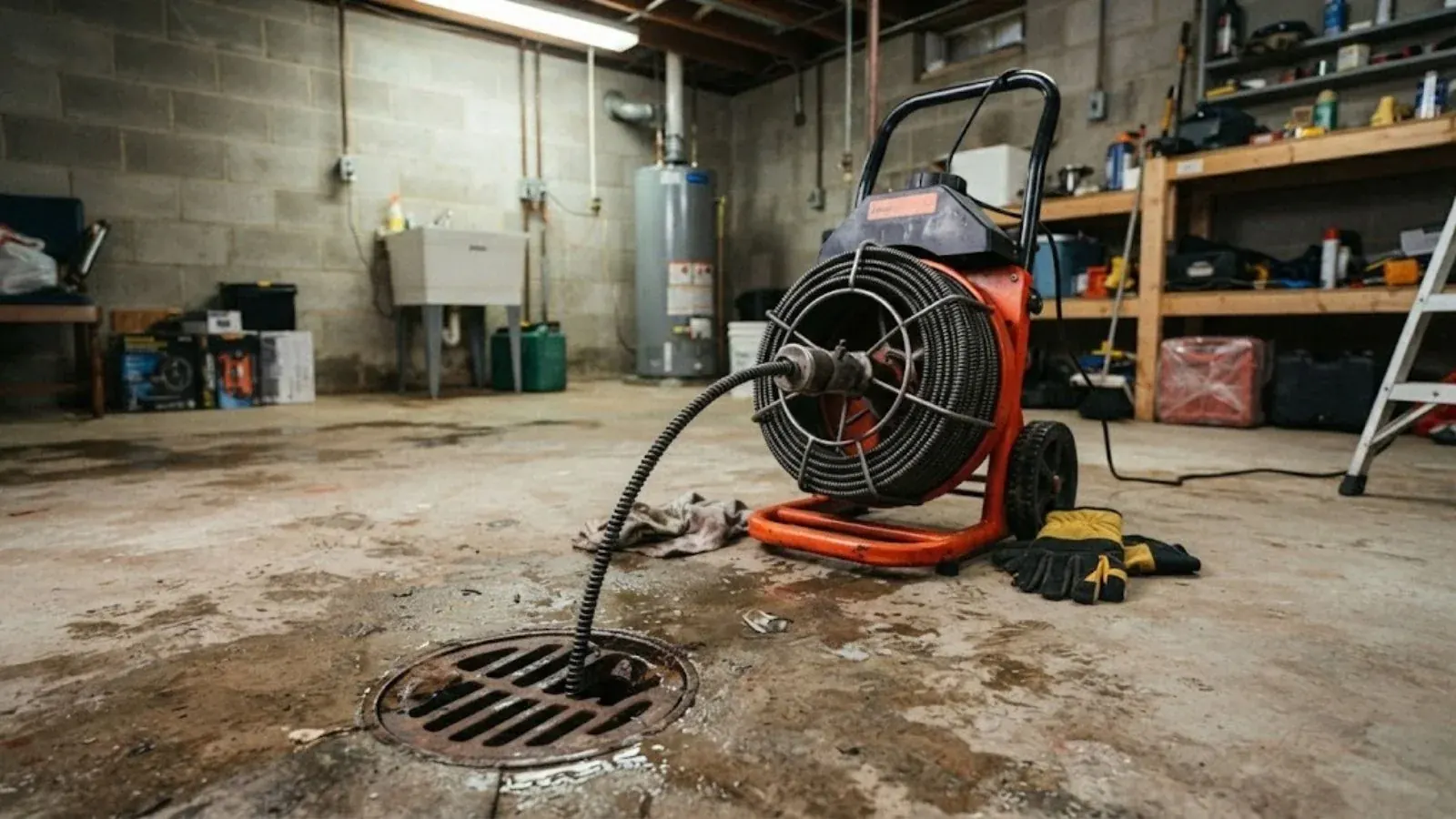
What a deep clog means
A clog lives in one of three places. It can sit in the toilet's own trap, which a plunger or closet auger reaches. It can sit in the branch line that serves the bathroom. Or it can sit in the main line that carries every drain in the house.
The trap is the easy case. Once an auger has gone in full length and the bowl still holds water, you are dealing with the second or third place. Stop plunging at that point. Repeated forcing can push the blockage tighter or splash dirty water onto the floor.
The ladder below shows how to narrow it down in about ten minutes using the fixtures you already have.
The test ladder: read the clues in order
| What you see | Likely location | Next move |
|---|---|---|
| Only this toilet is slow, others drain fine | Trap or short branch behind this toilet | Closet auger, then a plumber's cable if it fails. |
| Toilet and bathroom sink or tub drain slowly | Bathroom branch line | Cable the branch from a cleanout or the toilet flange. |
| Flushing makes the tub or shower gurgle or fill | Shared branch or main line | Stop using water and book a drain cleaning visit. |
| Lowest drain in the house backs up when others run | Main line clog | Stop all water use and ask for sewer line cleaning. |
| Sewage rises in a floor drain or basement fixture | Main line, possibly the city side | Call a plumber and Public Works. |
| Clog returns days after clearing | Roots, damage, or a belly in the pipe | Schedule a camera look before another cleaning. |
Gurgling in more than one fixture?
Describe the symptoms to dispatch and get a clear price before work starts.
What to do while the water stays high
- Do not flush again. Each flush adds a tank of water to a bowl that cannot drain.
- Lift the tank lid and close the fill valve or push the float down if the bowl is nearly full.
- Shut the supply valve at the wall by turning it clockwise.
- Keep sinks, showers, and the washer off until you know which line is blocked.
- Put towels at the base and wear gloves if water has overflowed.
If the bowl is full, scoop out some water into a bucket before you try anything else. Gloves, old towels, and good ventilation help. Raw sewage on a floor needs disinfecting, and a plumber can tell you what to do next.
Why the clog went deep in the first place
Wipes and paper products
Flushable labels do not mean the pipe can break them down. They tangle at bends and join other material.
Too much paper at once
A wad of paper can slide past the trap and stall in a branch with a gentle slope.
Roots at a joint
Fine roots find seams in older clay or cracked lines and catch everything that passes.
A bent or settled pipe
A dip holds water and debris. The clog keeps coming back until the low spot is fixed.
Items that never belonged
Toys, cotton swabs, and hygiene products are common culprits, especially with kids in the house.
Tools that reach farther, and why not to improvise
- A closet auger reaches the trap and a short distance beyond.
- A drum machine with a cable reaches the branch or main from a cleanout.
- A drain camera shows what the cable struck so the right fix gets chosen.
- A water jetter scours the pipe wall when grease, scale, or sludge is the real problem.
Home improvement stores sell chemical openers, but they can sit in a stopped bowl and burn skin during later cleanup. Skip them. A drain cleaning technician can cable the line, then confirm with a camera that the pipe is clear instead of just pierced.
When it is a main line job
A main line clog shows up in more than one fixture. The signs are gurgling in the tub when the toilet flushes, slow drains on the lowest floor, and a sewer smell from a drain. Those clues all point downstream of the toilet.
The right answer is usually sewer line cleaning from the house cleanout, plus a camera pass if this is not the first time. Roots and sags need more than a cable, so ask what the camera shows before you approve a repair.
After the water goes down
Flush once with a small amount of paper and watch the bowl. It should swirl, drop, and refill without a slow glug. Then run the tub and sink while someone listens at the toilet for bubbling.
Clean the floor with a disinfectant and let the area dry. If the overflow reached carpet or a wall base, pull back what you can and ask a restoration company about drying, since moisture left in place grows mold.
Last, change the habit that caused it. Keep a lidded bin in the bathroom, flush only paper made for sewer lines, and teach everyone in the house that the toilet is not a trash can.
What to tell the plumber on the phone
Dispatch can plan the visit better if you share five facts. Which fixtures are slow or full. When the problem started. Whether you used a plunger, auger, or any chemical. Whether you have a cleanout and know where it is. Whether this has happened before.
Give the answers plainly, and mention anything that went down the toilet that should not have. No one is judging you, and the information can save time on site.
Brigham City note: who owns the pipe
Brigham City's Public Works office at (435) 734-6615 is the number for questions about the city main in the street. That same office is the right contact when you cannot tell whether a blockage is on your side of the line.
Practically, that means you should have the plumber confirm the clog is in your service line before anyone digs or argues over ownership. Neighbors in Perry and Willard should call their own city offices, since each town runs its own system.
Source type: city Public Works contact page
Frequently Asked Questions
Run a tub tap and flush the toilet. If the tub gurgles or water rises in the lowest drain, the blockage sits in the shared line rather than the toilet.
Not until you know where the clog is. Water from a second bathroom may back up into the tub, floor drain, or lowest fixture.
They often do. They resist breaking down and tangle on rough spots, so the safest habit is to bag them.
A repeat clog usually means something is wrong with the pipe itself, such as roots or a low spot. Ask for a camera look to find the cause.
Call a plumber first for the house line. Then ask Public Works at (435) 734-6615 whether the problem sits on the city side, since owners are not always sure where the line changes hands.
Sources and standards
- Plumbing codes in the UPC and IPC families set the rules for fixtures, venting and drains. Ask the Brigham City building office at (435) 734-6604 which edition and permit rules apply to your job.
- The Utah Division of Professional Licensing offers a public Verify a License tool for checking any plumber's license class.
Written by Brigham City Pro Plumbing. Last updated October 29, 2026.