
Clear it or repair it: the short version
Most first-time sewer clogs are cleared with a cable or a water jetter, and the line goes back to normal. If the same clog returns within a few months, the cause is rarely bad luck. Roots, a cracked joint, or a sagging section is catching waste.
Cleaning removes the blockage. Repair removes the reason it formed. A camera inspection is what separates the two, because it shows the pipe wall and not just the obstruction.
Use the sections below to match your symptoms with the right next step.
Warning signs that the main line is struggling
- Drains throughout the house run slowly, not just one sink.
- A toilet gurgles or bubbles when the washer or tub drains.
- A sewer smell comes from a floor drain or lower bathroom.
- The lowest tub, shower, or floor drain shows wastewater when you run water elsewhere.
- Wet, soft ground or unusually lush grass in the yard above the line.
Any of these can start small and finish with sewage inside the house. Once water from one drain pushes up another, stop running water and call. Every flush and every load of laundry pushes more wastewater into the blockage.
Same clog twice this year?
Ask for a camera inspection before paying for another cleaning.
What each fix actually does
| Fix | Best for | Limits |
|---|---|---|
| Cable (auger) | Soft clogs, paper, a first-time blockage | Opens a channel but may leave debris on the pipe wall. |
| Hydro jetting | Grease, sludge, scale, and fine roots | Not a repair, and weak pipe may not suit high pressure. |
| Camera inspection | Repeat clogs, buying a house, unknown cause | Finds the problem but does not clear it by itself. |
| Spot repair | One cracked or offset section | Needs excavation or a pipe liner at that point. |
| Trenchless lining | Long cracked runs with a good path | Needs a pipe that is still round and clear to prepare. |
| Replacement | Collapsed, bellied, or many damaged sections | Largest job, with digging and restoration. |
A plumber should explain why one option fits your line better than another, and show the camera footage that supports it.
How a crew finds the blockage
The first move is usually to open the cleanout and feed a cable toward the house or the street. The tech reads the feel of the cable: a soft give suggests paper or grease, a hard grind suggests roots, and a sudden stop suggests a break or offset.
A camera on a flexible rod follows, and it shows the pipe wall, any roots, and where the pipe changes shape. Many cameras also carry a transmitter. A locator above ground reads the signal and marks the spot with paint or a flag.
That mark matters when digging is possible. It tells the crew how deep the pipe is, how far from the house the problem sits, and whether the trouble spot is under a driveway, a tree, or open lawn.
Roots and why they keep coming back
- Roots seek moisture and enter at joints or hairline cracks.
- A cable cuts them back, but the cut ends regrow.
- Jetting scours the pipe wall and slows the regrowth.
- A lined or replaced section closes the door roots used to enter.
- Trees planted over the line make the cycle worse.
If roots are the cause, the conversation shifts from clearing to deciding how long you want to keep paying for cleanings. A camera clip lets you see the root mass yourself and weigh a permanent fix.
What to do right now if it is backing up
- Stop the water
Hold off on showers, dishwashers, and laundry. Every gallon has nowhere to go.
- Find the cleanout
It is a capped pipe, often in the basement, crawlspace, or yard near the house. Do not open a cleanout that is already holding back wastewater.
- Protect the floor
Move belongings, lay down towels, and wear gloves around any sewage.
- Call a plumber
Tell dispatch which fixtures are affected and whether any wastewater is on the floor.
- Skip the chemicals
Drain openers do not clear a main line and make later cleanup more dangerous.
When digging is on the table
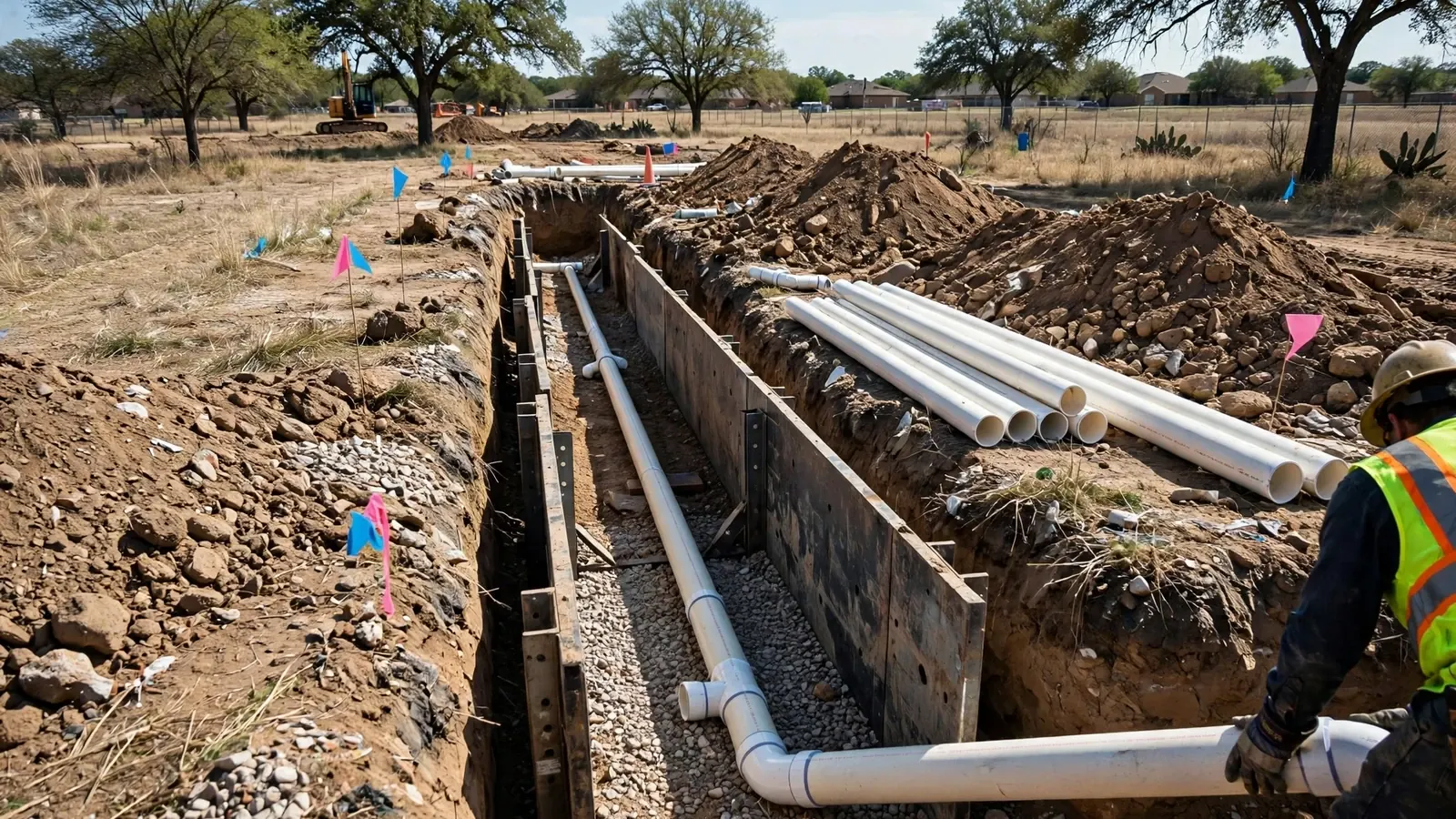
For any sewer line repair, spot repair and replacement both mean excavation, and Utah requires a call to Blue Stakes of Utah before digging. Dial 811, or 800-662-4111, at least three business days and no more than fourteen calendar days before the dig.
That call marks buried utilities so a shovel or machine does not hit a gas or power line. Your plumber should handle it or confirm it is done. If you are digging yourself, do not skip it just because the area looks clear.
Who owns which stretch of pipe
The line from your house to the connection with the city main is usually your responsibility, while the main belongs to the utility. Where one ends and the other begins varies, so ask Brigham City Public Works at (435) 734-6615 before you assume.
A camera inspection that records the distance to the problem can settle the question quickly. If the clog sits at the junction or beyond it, show the footage to the city office.
Stopping the next clog
Keep grease out of kitchen drains, bag wipes and hygiene products, and avoid planting trees directly over the line. Ask for a camera pass when you move into a home you did not build.
If your line has needed cleaning twice in a year, get a camera look before a third time. A short sewer camera inspection costs less than a flooded basement, and the video helps you compare repair quotes later.
Brigham City note: 811 and who owns the line
Blue Stakes of Utah takes 811 calls, or 800-662-4111, at least three business days and no more than fourteen calendar days before excavation. If a sewer repair needs digging, build that wait into your timeline.
Brigham City Public Works at (435) 734-6615 is the place to ask which segment belongs to the city. In Willard, ask Willard City whether your address is on city sewer, and in Tremonton ask Tremonton City, because the answers affect who pays and who works on the pipe.
Source type: Blue Stakes of Utah notice rules and city Public Works contact page
Frequently Asked Questions
A small hand auger can handle a minor clog at a cleanout. A main line blocked by roots or a collapse needs a machine and a camera, and opening a cleanout under pressure is messy.
Not always. A camera can show whether roots, a joint, or a low spot is catching waste, and many of those are fixed without replacing the whole run.
Yes, if wastewater is entering the house. Stop water use and call at any hour.
Ask the city. Willard City, for example, can tell you whether your address is on city sewer, and Tremonton City can answer for its service area. The answer changes who to call and how the line is cleared.
Call 811 for Blue Stakes of Utah at least three business days beforehand, then let your plumber coordinate the repair.
Sources and standards
- Plumbing codes in the UPC and IPC families set the rules for fixtures, venting and drains. Ask the Brigham City building office at (435) 734-6604 which edition and permit rules apply to your job.
- The Utah Division of Professional Licensing offers a public Verify a License tool for checking any plumber's license class.
- Blue Stakes of Utah asks you to call 811 at least 3 business days before any digging so buried lines get marked.
Written by Brigham City Pro Plumbing. Last updated October 29, 2026.