
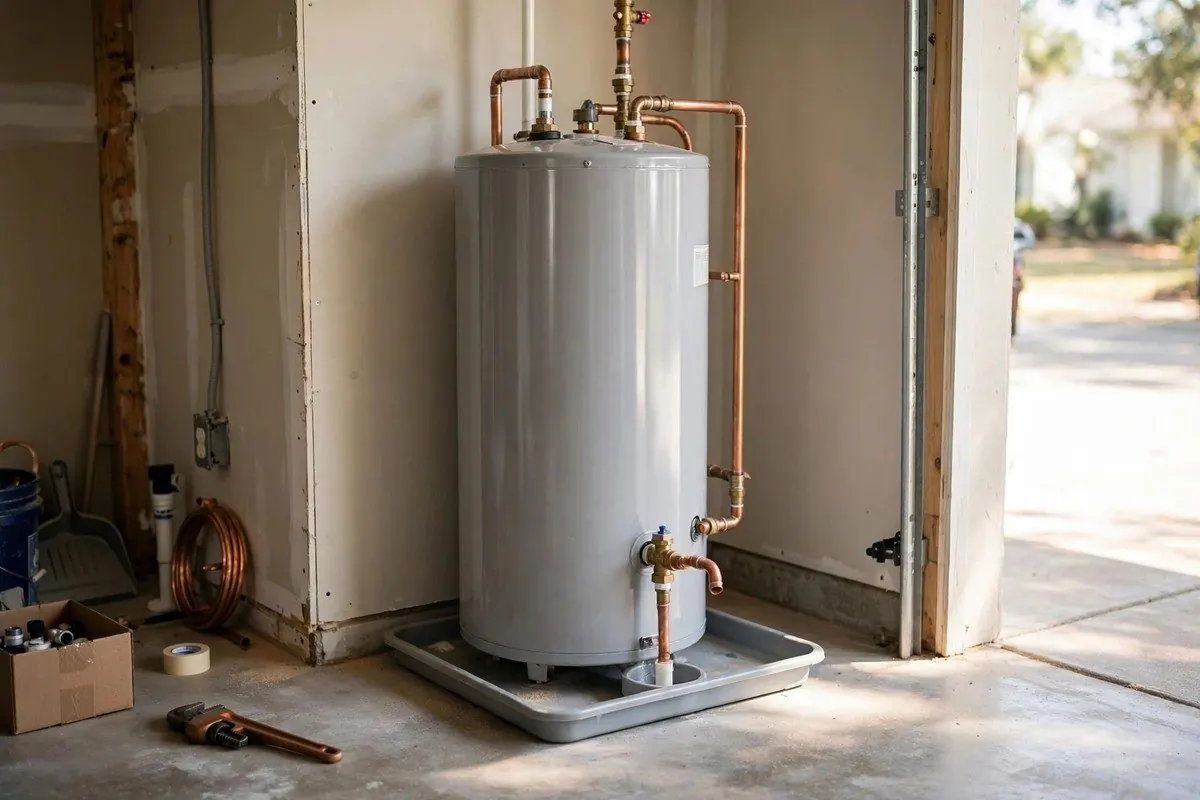
Straight answer: sometimes, and gas changes the math
An electric tank swap is the easier of the two. You shut off the breaker, drain the old tank, move the water lines, and wire the new one. A gas swap adds a gas connection, a vent that must pull exhaust out of the house, and a burner that has to light safely.
Plenty of owners have done both. The real question is whether you can test your own work, because a slow leak, a loose gas fitting, or a weak vent will not announce itself during the first hot shower.
Before you buy anything, read the permit and license sections below. They can decide the whole project.
Gas versus electric: a quick decision table
| Question | Electric tank | Gas tank |
|---|---|---|
| Biggest hazard | Live power while you work on the wiring | Gas leak and exhaust gas, which includes carbon monoxide. |
| Skills beyond basic plumbing | Safe wiring and a tight breaker lockout | Gas fitting, leak testing, and vent sizing and slope. |
| Hardest part for most people | Lifting and moving a heavy full tank | Getting the vent and the gas joint right. |
| How you check your work | Fill fully before power goes on, then watch for drips | Soap-bubble test on joints, then confirm the vent draws. |
| Typical advice | Reasonable for a skilled owner who gets answers on permits | Hire a licensed plumber for the gas side at minimum. |
If either column makes you hesitate, that hesitation is useful information.
Unsure about gas or the permit?
Talk it through with a licensed plumber before you buy a tank.
If you smell gas, the order of operations matters
- Leave the house first. Do not flip switches or hunt for the leak.
- Once you are safely away, call 911 or your gas utility's emergency line.
- Do not relight, test, or restart the heater until the line has been checked.
- Keep pets and neighbors out of the area until responders clear it.
Enbridge Gas Utah advises exactly this sequence: leave, then call. No water heater project is worth staying inside to finish.
Who is allowed to do the work, and what needs a permit
Permit rules vary, so ask the Brigham City building office at (435) 734-6604 before starting. The city's own page does not spell out a water heater exemption, and guessing wrong can cost you a failed inspection when you sell.
Ask three things on that call: whether a permit is required for a like-for-like swap, whether a homeowner may pull it, and which plumbing code edition applies. Utah adopts plumbing codes at the state level, and the office can tell you which edition is in force.
Also ask Public Works about thermal expansion. The city publishes guidance on how water heating systems handle expansion, and it affects whether the new install needs an expansion tank.
How to verify any plumber you hire
If you decide to hand it off, check the license yourself. The Utah Division of Professional Licensing runs a Verify a License tool at secure.utah.gov/llv/search/index.html, and any homeowner can use it.
DOPL lists these plumber classes: apprentice, journeyman, residential journeyman, master, and residential master. Look up the name and class, then confirm that the person who shows up matches the person who quoted.
You can then compare quotes on the same terms. A clear price before work starts, written down, beats a ballpark that grows on the day.
A fair way to decide
- Name the fuel
Gas means a licensed plumber for at least the gas and vent connections.
- Call the building office
Get the permit answer in writing or note the date and the name you spoke with.
- Inspect the setup
Check where the old unit drains, how the vent runs, and whether an expansion tank or shutoff valve is missing.
- Count the hands
A full tank is heavy and awkward. If you cannot get a second person, plan for professional help.
- Price your time
Add up the parts, haul-away, and a weekend. Compare that to a water heater installation quote with a clear price before work starts.
Prep list if you go ahead anyway
- A helper for the lift, and a hand truck rated for the weight of a full tank.
- New flexible connectors and a new relief valve, not the old ones reused.
- Fresh dielectric or approved fittings where copper meets steel.
- A garden hose and a floor drain or a clear exit for tank water.
- A plan for the old tank before the old tank is out of the closet.
Turn off the fuel and the water first, open a hot tap upstairs so the tank can drain, and let the water cool before you touch fittings. Scalding water from the drain valve is a real burn risk, and rushing this step is where most injuries happen.
What a failed DIY usually looks like
The common failures are boring. A union weeps under the tank for weeks. A relief valve discharge pipe is left uncapped or points the wrong way. A vent sags and spills exhaust into the closet.
None of these show up on day one. They show up as stained flooring, a rusty fitting, or a hot-water smell weeks later, which is why a second set of eyes from a licensed plumber before you close up is cheap insurance.
If the old tank is leaking now, shut off the water to it and read about emergency water heater repair before deciding.
Brigham City note: permits, gas, and license checks
The city's Community and Economic Development office at 20 N. Main, 2nd Floor, handles building permits and inspections at (435) 734-6604. Its page does not state a plumbing permit or water heater exemption, so a short phone call settles your project before you pull the old tank.
If your tank is gas, remember the safety order from the utility: leave first, then call 911 or the gas company. Homeowners in Perry or out in Tremonton should ask their own city office whether the same permit answers apply to their address.
Source type: city building permits page and Utah DOPL license lookup page, plus gas utility safety guidance
Frequently Asked Questions
A skilled owner often can, but permit rules vary, so ask the Brigham City building office at (435) 734-6604 first. Lock out the breaker and confirm the wires are dead with a tester.
Most plumbers advise against it. A small gas joint error or a weak vent can leak gas or exhaust, so have a licensed plumber handle at least the gas and venting work.
Use the DOPL Verify a License tool and search by name. Compare the license class on screen to the work you are asking for.
That depends on how your system is set up. The city publishes guidance on thermal expansion, so ask Public Works at (435) 734-6615 and ask the building office what your install needs.
Drain it fully and keep the water off floors. Ask your local waste hauler or a scrap yard about taking it, since rules differ by provider.
Sources and standards
- Plumbing codes in the UPC and IPC families set the rules for fixtures, venting and drains. Ask the Brigham City building office at (435) 734-6604 which edition and permit rules apply to your job.
- The Utah Division of Professional Licensing offers a public Verify a License tool for checking any plumber's license class.
- The Brigham City Water Division explains hardness, pressure testing and water quality on its water page. Call Public Works at (435) 734-6615 with questions.
- Enbridge Gas Utah says to leave the building first if you smell gas, then call 911 or its 24-hour emergency line from outside.
Written by Brigham City Pro Plumbing. Last updated October 29, 2026.