
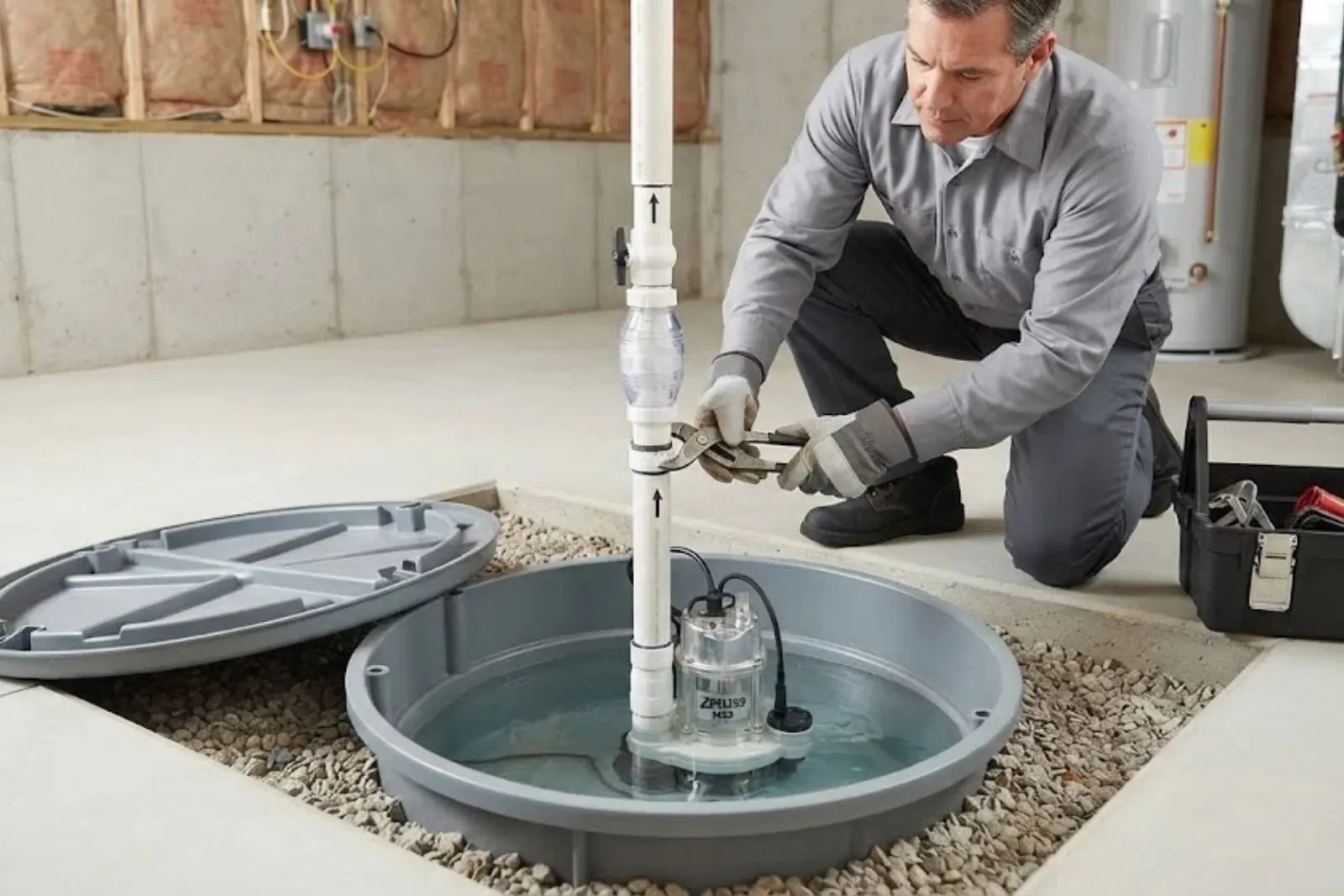
Why the backup exists at all
A primary sump pump has two weak points. It needs electricity, and it can wear out. Storms that fill the pit often knock out power, and that is exactly when the pump has to run hardest.
A battery backup is a separate pump, a float switch, and a deep-cycle battery in a vented box, wired so that it starts when the water rises past the primary's level. Some systems add an alarm that sounds when the backup starts or when the battery is low.
For a basement with finished space, stored belongings, or a furnace on the floor, the backup is cheap compared with replacing carpet and drywall.
Do you need one? A scorecard
| Question | If yes | If no |
|---|---|---|
| Is the basement finished or does it hold valuables? | Strong reason to add a backup | Lower stakes, but check anyway. |
| Does the pit fill quickly during melt or storms? | Pump runs often and wears faster | Primary may be enough with testing. |
| Does your power go out in storms? | The primary stops with it | Mains power is less of a worry. |
| Is the primary pump more than a few years old? | Age raises failure odds | Test it and note its age. |
| Do you travel or leave the home empty? | Nobody is there to notice a failure | You can check the pit yourself. |
| Does the home sit near a creek channel or low ground? | Flood risk is higher | Still confirm with a pit test. |
Three or more yeses means a backup is worth pricing. Ask the installer to size it to your pit and discharge, not to a generic kit.
Not sure your pump would survive an outage?
Ask a licensed plumber to test it and size a backup.
What a proper installation includes
- Inspect the pit
The installer checks pit size, the existing pump, the float, and whether the pit is clean enough for a second pump to sit beside the first.
- Set the heights
The backup float should engage just above the primary's switch point, so both are not fighting over the same water level.
- Plan the discharge
Each pump needs a check valve to stop water from flowing back into the pit. The backup may tie into the primary discharge or run its own line.
- Place the battery
The box is vented and sits off the floor on a shelf. Keep it away from the furnace and from anything that sparks.
- Test under load
Pour water in, unplug the primary, and watch the backup lift the pit down. Then plug the primary back in.
Common installation mistakes
- Putting both pumps at the same float height so they start together.
- Skipping the second check valve so water falls back into the pit.
- Leaving the discharge line to end beside the house wall.
- Mounting the battery box on the damp floor.
- Never testing the system after the first week.
Each of these mistakes shows up only on the worst day. A careful installer will test the whole setup before leaving, and show you how to test it yourself each season.
What a backup cannot do
A battery backup is a bridge, not a power plant. In a long outage the battery runs down, and a pit that fills faster than the backup pump can empty it will still overflow. Know your pit's behavior before you trust any system.
It also does nothing for sewage ejector pits, which have different pumps and rules, and it cannot fix a pit that floods because the discharge line is frozen or the check valve is stuck. Those are separate problems that a plumber can diagnose.
Finally, a backup does not make a wet foundation dry. If water comes through walls or seeps up through the slab, the pump only manages what gathers in the pit. Fix the inflow where you can.
Care and testing through the year
Test both pumps at the start of spring and again in autumn. Pour in a bucket of water, make sure the float rises freely, and listen for a smooth motor. A pump that grinds, rattles, or runs without moving water needs service.
Batteries age. Check the date and the charge indicator at each test, and replace the battery on the schedule your manual sets. If the alarm chirps, treat it as a real warning, not background noise.
Questions to put to an installer
Ask what the battery will run and for how long, where the check valves go, and how the system sounds an alarm. Ask what you should test and how often. A plain answer to each is a good sign.
When a single pump on a single power line is all that protects the basement, there is no margin, which is the gap a sump pump backup is built to close. Ask how the installer will test it before leaving.
If a basement project is already on your list, ask whether a plumbing installation bid can include the pit, pump, check valves, and discharge in one plan so one company owns the result. Request a clear price before work starts and a written list of what is included.
Also ask who services the system afterward. A pump that nobody checks is just a part waiting to fail. Compare answers from two companies before you decide, and note which one explained the trade-offs without pressure.
Brigham City note: melt season and creek water
Brigham City averages 38.3 inches of snow a year and sees its January lows near 18.1 F, according to NOAA climate normals for 1991 to 2020. That snow melts in spring, so test your sump system before the thaw and keep the discharge line clear of ice.
Box Elder Creek spilled over on the morning of March 23, 2018, and about ten homes had water, basements among them, with thousands of sandbags placed. A single pump on a single power line leaves no margin when water arrives that fast, so if your home sits near a channel, ask about the backup before the melt. Neighbors in Perry and Tremonton should check local drainage with their own city offices.
Source type: NOAA climate normals via Wikipedia and a March 2018 local news report
Frequently Asked Questions
It depends on battery size, pump size, and how fast water enters the pit. Ask the installer for an estimate for your setup and a plan for long outages.
Often yes, if the pit is large enough for two pumps and the discharge can handle the second line. An installer checks that on site.
Sometimes, with a check valve on each pump. A separate line is more reliable but costs more.
Test before the spring melt starts, since the city sees an average of 38.3 inches of snowfall a year, and again in autumn before storms. Add a test after any long power outage.
No. It protects the sump only, for a limited time. A generator can power more, but it needs its own installation and fuel.
Sources and standards
- Plumbing codes in the UPC and IPC families set the rules for fixtures, venting and drains. Ask the Brigham City building office at (435) 734-6604 which edition and permit rules apply to your job.
- The Utah Division of Professional Licensing offers a public Verify a License tool for checking any plumber's license class.
- Blue Stakes of Utah asks you to call 811 at least 3 business days before any digging so buried lines get marked.
Written by Brigham City Pro Plumbing. Last updated October 29, 2026.